
RF Microneedling for Acne Scars: What to Expect
- antonio bianco
- Apr 21
- 6 min read

Acne may be long gone, but the texture it leaves behind has a way of changing how skin looks in every kind of light. Makeup can soften the appearance. Good skincare can support overall health. But when scars create visible unevenness, enlarged pores, and shallow or deeper indentations, many people want a treatment that works below the surface. That is where rf microneedling for acne scars often becomes a serious consideration.
This treatment appeals to clients who want more than a temporary glow. It is designed to stimulate meaningful collagen remodeling, which matters because acne scars are structural changes in the skin, not simply discoloration on top of it. For the right candidate, RF microneedling can improve texture, refine pores, and make old scars look significantly less noticeable over time.
How RF microneedling for acne scars works
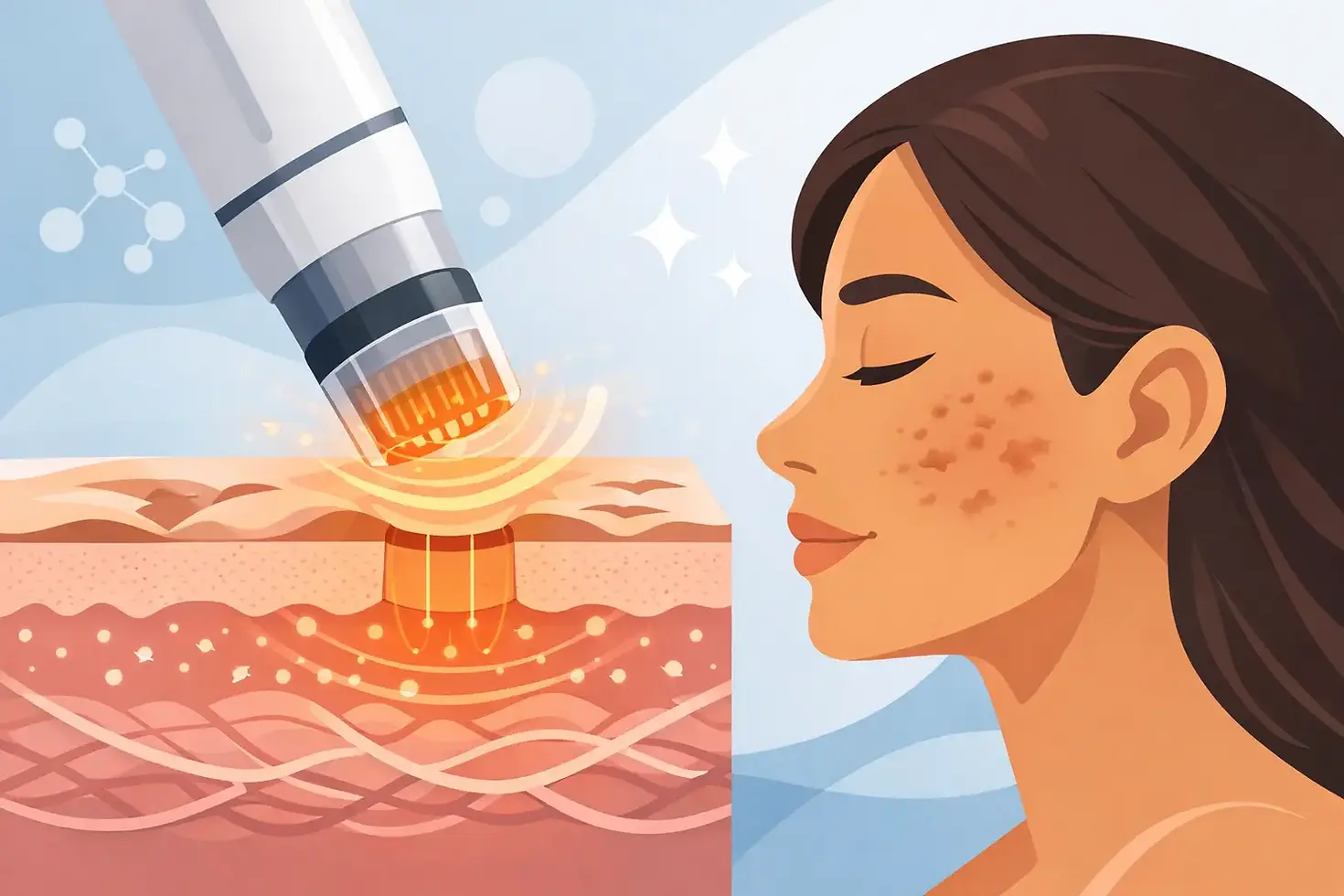
Traditional microneedling creates controlled micro-injuries in the skin to trigger repair. RF microneedling takes that concept further by delivering radiofrequency energy through fine needles into targeted depths of the skin. The combination of mechanical injury and thermal energy encourages a stronger remodeling response than microneedling alone.
For acne scars, that depth matters. Rolling scars and certain boxcar scars respond best when treatment reaches the deeper layers where collagen has been disrupted. Rather than polishing the surface only, RF microneedling works where the scar tissue formed. Over a series of sessions, the skin can become smoother, firmer, and more even in texture.
The benefit is not just about scar softening. Many patients also notice improvement in pore size, mild skin laxity, and overall skin quality. That makes the treatment especially appealing for adults who want a refined, healthier-looking complexion rather than a one-dimensional fix.
Which acne scars respond best
Not every scar behaves the same way, and results depend heavily on scar type. Rolling scars often respond well because they are tethered and shallow enough to improve with collagen stimulation. Boxcar scars can also improve, especially when they are not extremely deep. Ice pick scars are more challenging. They are narrow, deep, and often need a more customized plan that may include other in-office treatments.
This is why consultation matters. A thoughtful provider will look at depth, pattern, skin tone, active breakouts, and the overall condition of the skin before recommending a plan. In some cases, RF microneedling is the hero treatment. In others, it is one part of a broader strategy.
Pigmentation is another factor. If acne marks are mostly red or brown rather than indented, RF microneedling may still help overall texture, but it may not be the only answer. Scars and discoloration often travel together, yet they need to be treated with different tools.
What makes it different from laser resurfacing
Patients often compare RF microneedling with fractional laser treatments, and that comparison makes sense. Both can improve acne scars by stimulating collagen and resurfacing the skin in different ways. The difference is in how the energy is delivered and how the skin responds.
RF microneedling creates channels and delivers heat beneath the surface, with less emphasis on removing the outermost layer. That usually means downtime is manageable and treatment can be suitable for a wider range of skin tones when performed appropriately. Laser resurfacing can be more aggressive and may deliver more dramatic improvement in some cases, but it also often comes with more recovery.
Neither option is universally better. It depends on the scar pattern, your skin type, your schedule, and how much downtime you are willing to accept. For many busy professionals and image-conscious clients, RF microneedling offers an attractive middle ground - noticeable improvement with a recovery period that feels realistic.
What to expect during treatment
A polished treatment experience starts well before the device touches the skin. Your provider should review your history, examine your skin closely, and discuss expectations with precision. If you are dealing with active acne, melasma, certain medications, or a history of abnormal scarring, the plan may need to be adjusted.
On the day of treatment, a topical numbing cream is typically applied first. Once the skin is prepared, the provider passes the RF microneedling device across the treatment area, adjusting needle depth and energy based on the location and severity of scarring. Areas with deeper scars may be treated more aggressively than regions with finer texture concerns.
Most patients describe the experience as very tolerable, especially with proper numbing. You can expect warmth, pressure, and a prickling sensation, but not the kind of intensity many people fear before their first session. Treatment time depends on the size of the area, though full-face sessions are generally efficient enough to fit into a busy schedule.
Recovery and the first few days after RF microneedling for acne scars
Right after treatment, the skin usually looks flushed and may feel warm, tight, or slightly swollen. Some patients compare it to a moderate sunburn. Tiny pinpoint marks can appear for a short period, especially in areas treated at greater depth. Most of this settles within a few days.
The skin may feel rough or dry as it begins its repair process. During this window, aftercare matters. You want gentle cleansing, appropriate hydration, diligent sun protection, and a temporary pause on potentially irritating active ingredients unless your provider advises otherwise.
Social downtime is often shorter than with more aggressive resurfacing, but that does not mean the skin should be rushed. If you have a major event on the calendar, plan ahead. Looking presentable the next day is not the same as looking fully settled.
How many sessions you may need
One treatment can create visible improvement, particularly in overall tone and refinement. Acne scars, however, usually require a series. Most patients need three to six sessions spaced several weeks apart, sometimes more for deeper or longstanding scars.
This can be the point where expectations need to stay grounded. RF microneedling does not erase acne scars overnight, and reputable providers should never present it that way. The skin remodels gradually as collagen production increases over time. Results tend to build from one session to the next, with continued improvement in the weeks after each appointment.
That slower progression is not a drawback for everyone. For many patients, the appeal is that improvement looks natural. Skin appears healthier, smoother, and more refined without a dramatic change that feels abrupt.
Who is a strong candidate
The best candidate is someone with atrophic acne scars, realistic expectations, and a commitment to a treatment plan rather than a single appointment. It is also ideal for patients who want textural improvement with moderate downtime and who value a clinically guided approach.
If you still have frequent inflammatory breakouts, treatment may need to wait until acne is under better control. Creating a scar-correction plan while new lesions are actively forming is rarely the most efficient path. Likewise, if your skin is very reactive or you are prone to post-inflammatory hyperpigmentation, the settings and pre-treatment preparation become even more important.
This is where a medically supervised environment makes a difference. Customized care is not just a luxury detail. It directly affects safety, comfort, and the quality of the outcome.
The role of combination treatment
Some of the best acne-scar results come from combining therapies thoughtfully. RF microneedling can do a great deal for texture and collagen renewal, but certain scars respond better when other procedures are layered into the plan. Subcision, targeted laser treatments, peels, or regenerative add-ons may all be considered depending on your skin and goals.
That does not mean more is always better. It means precision matters. A refined treatment plan should match the biology of your scars rather than apply the same protocol to everyone. In a consultation-driven setting like Eden Med Spa, that level of personalization is part of what turns treatment into transformation.
Is RF microneedling worth it for acne scars?
For the right patient, yes. RF microneedling for acne scars can be an excellent investment in skin quality because it addresses one of the hardest concerns to treat - texture. It is especially valuable for patients who want meaningful improvement without stepping into the longer recovery often associated with more aggressive resurfacing.
Still, the answer depends on your starting point. Very deep scars may need additional modalities. Mild textural changes may respond beautifully with a short series. Skin tone, healing behavior, age, and collagen quality all influence the final result.
The most satisfying outcomes usually come from patients who understand that scar revision is a process, not a quick fix. When treatment is selected carefully and performed with expertise, the payoff is not only smoother skin. It is the confidence of no longer feeling like old breakouts still define your reflection.
If acne scars have kept your skin from looking as polished as you feel, the next step is not guessing which trend might work. It is having your skin evaluated with the same level of care and precision you expect from every other worthwhile investment.


Comments